This small house was created as the second project in a 3D specialization course at Escola Revolution.
The design is based on references such as the Gropius House and the “Raio-que-o-Parta” mural tradition — a vernacular decorative style found in residential façades in Belém, Pará (Brazil). This style is characterized by geometric, angular and colorful patterns, often resembling arrows, lightning bolts and boomerangs, created through the arrangement of ceramic tile fragments and influenced by modernist architecture.
The project was developed under technical constraints, using only poly-by-poly modeling (without subdivision) and procedural textures. These limitations encouraged a more deliberate approach to shape design, topology and surface detail, helping to strengthen my understanding of low-poly construction and stylized material creation.
Software: Blender 4.1; Render Cycles.
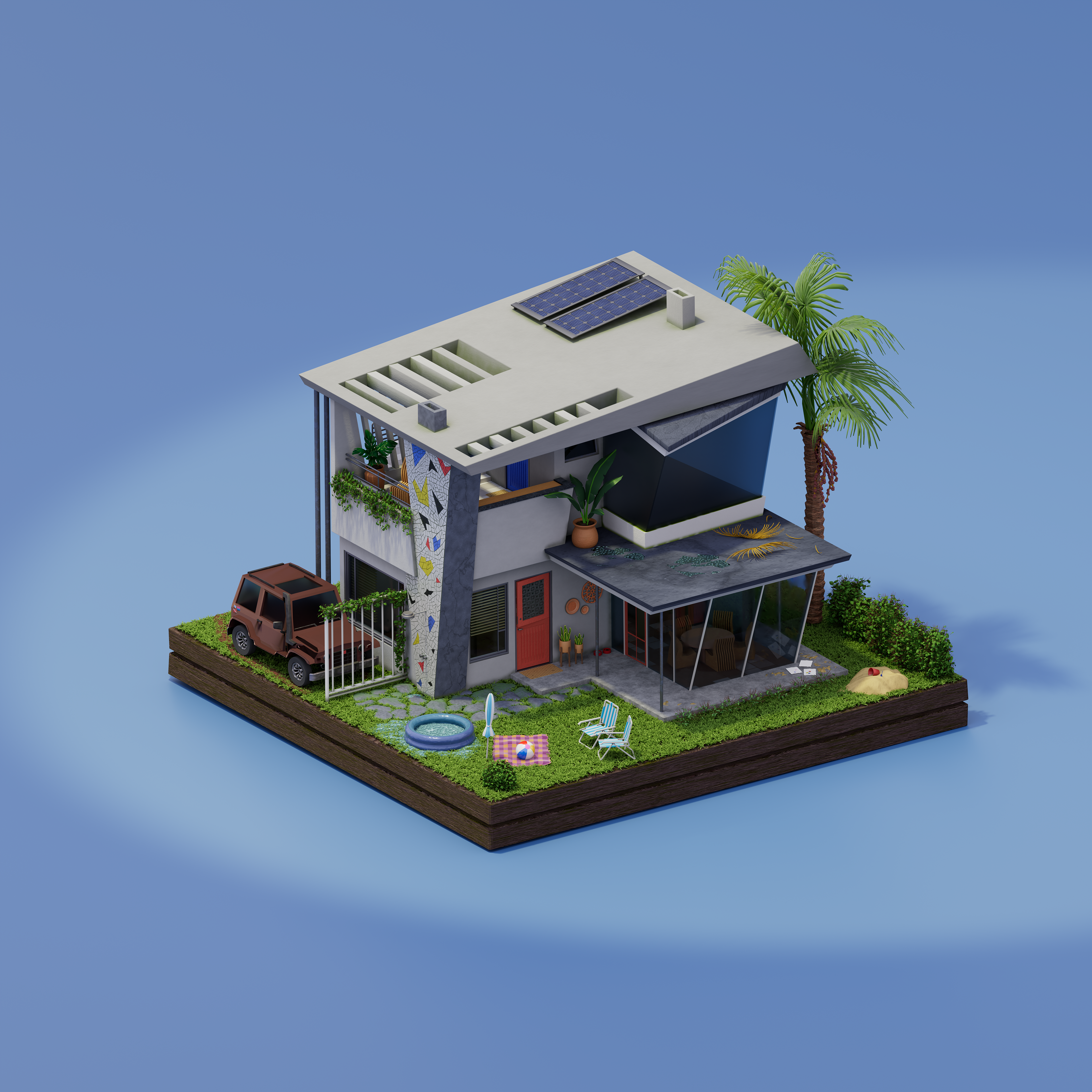
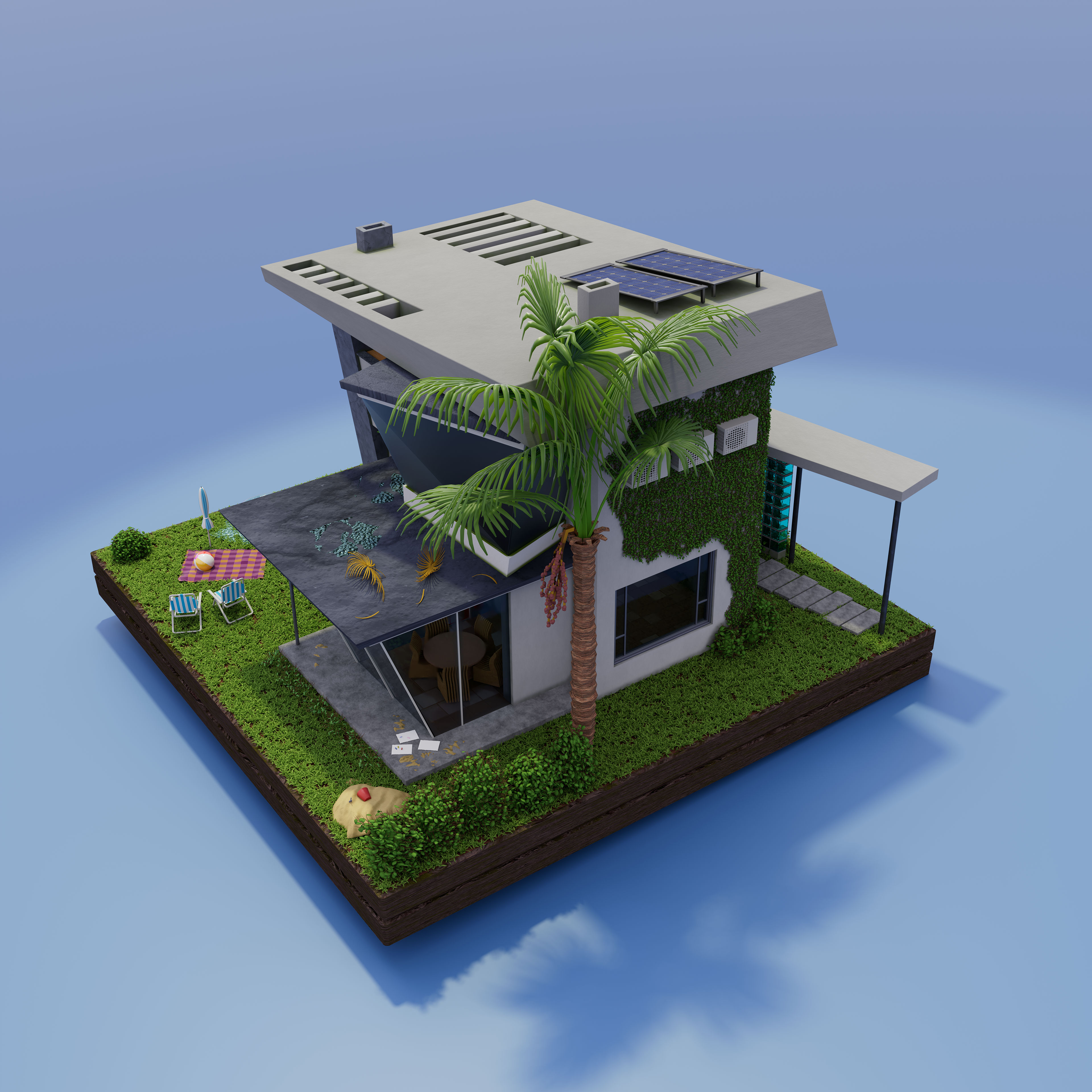
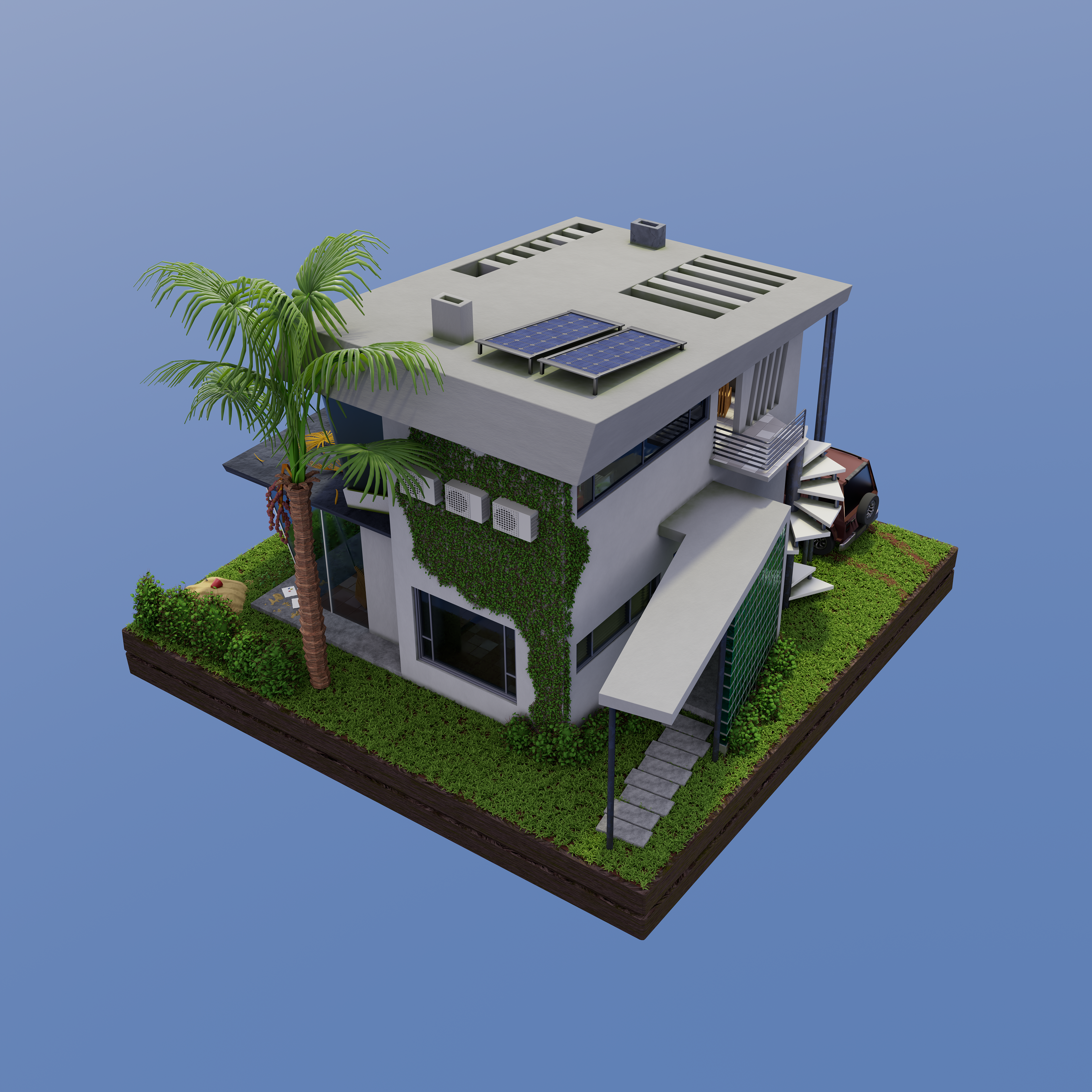
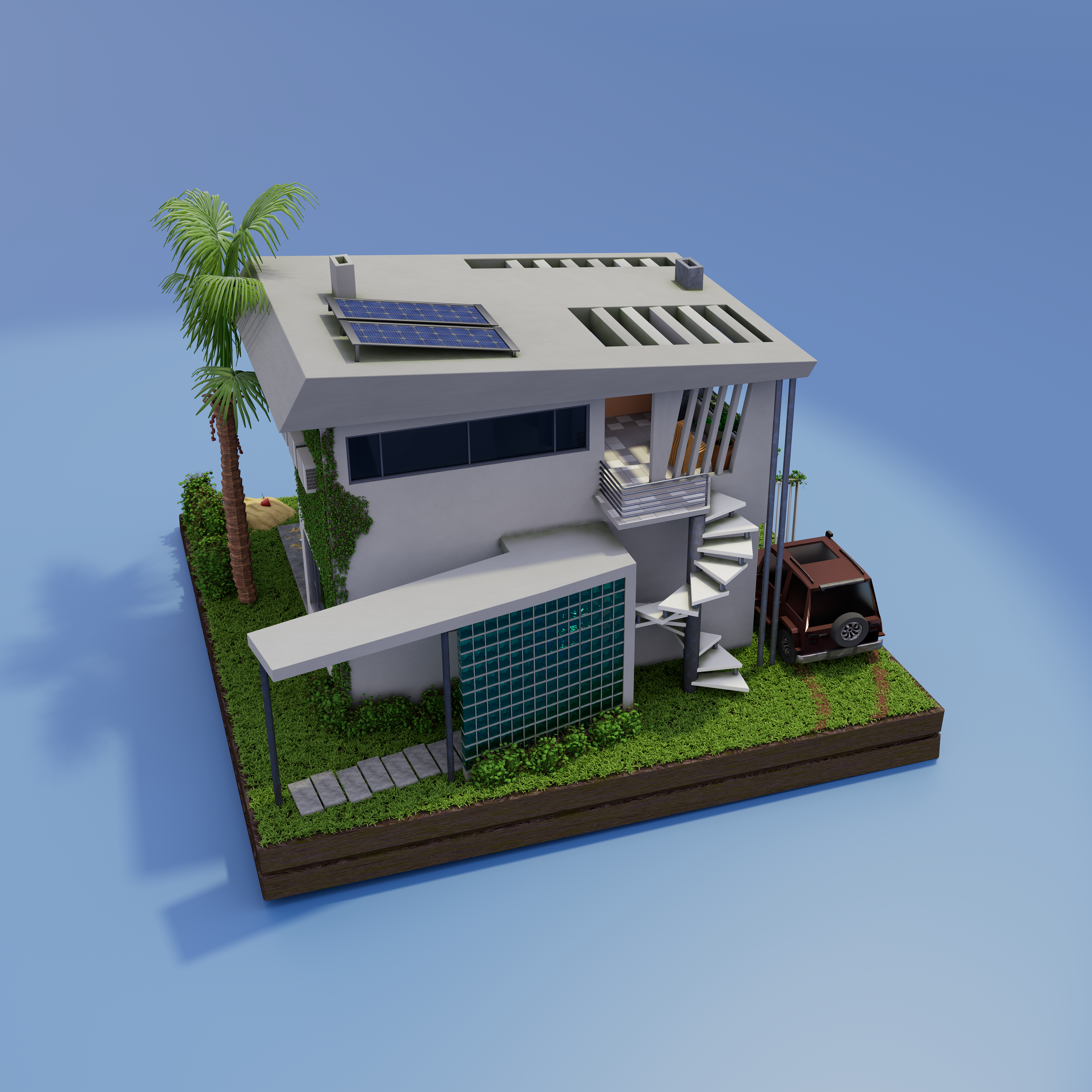
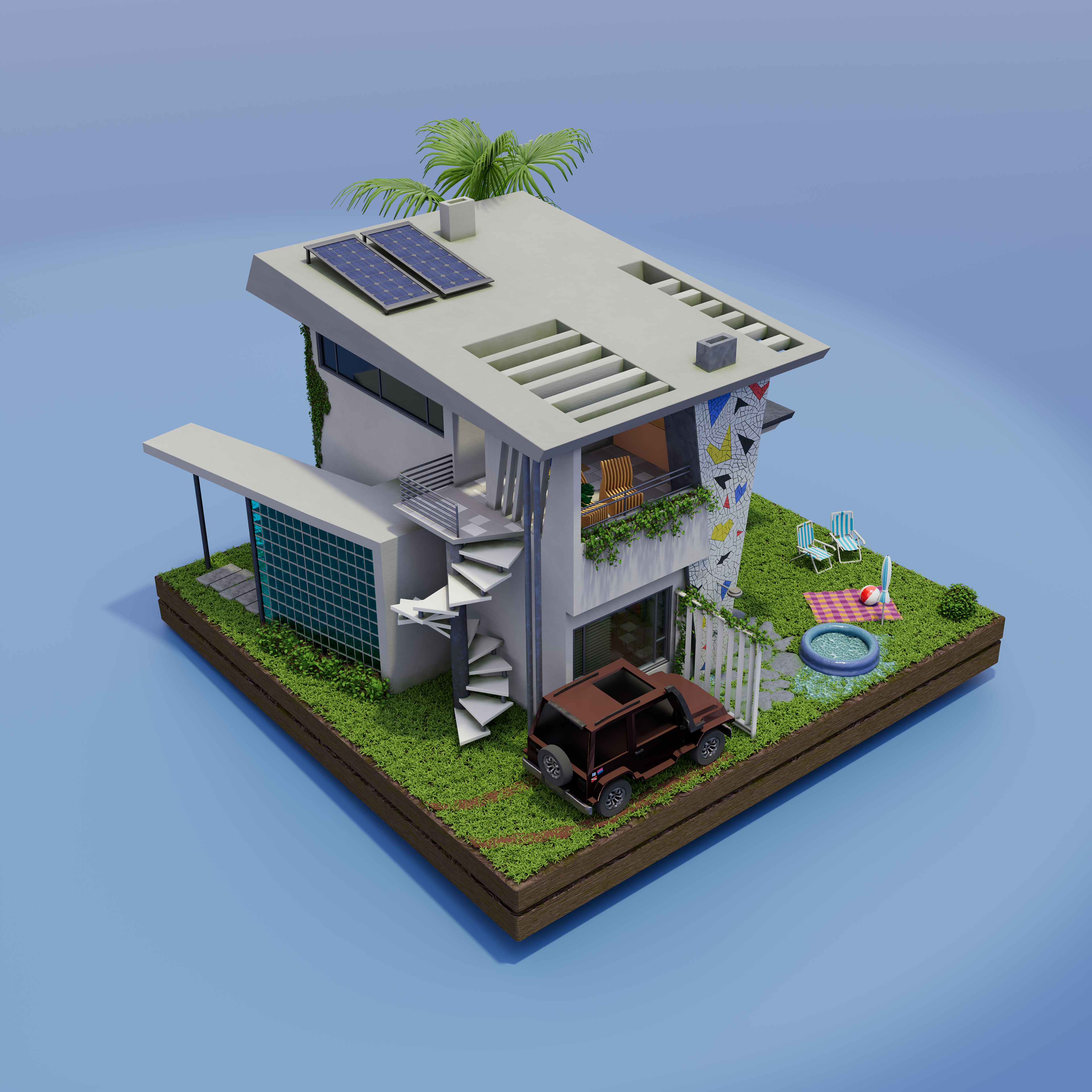
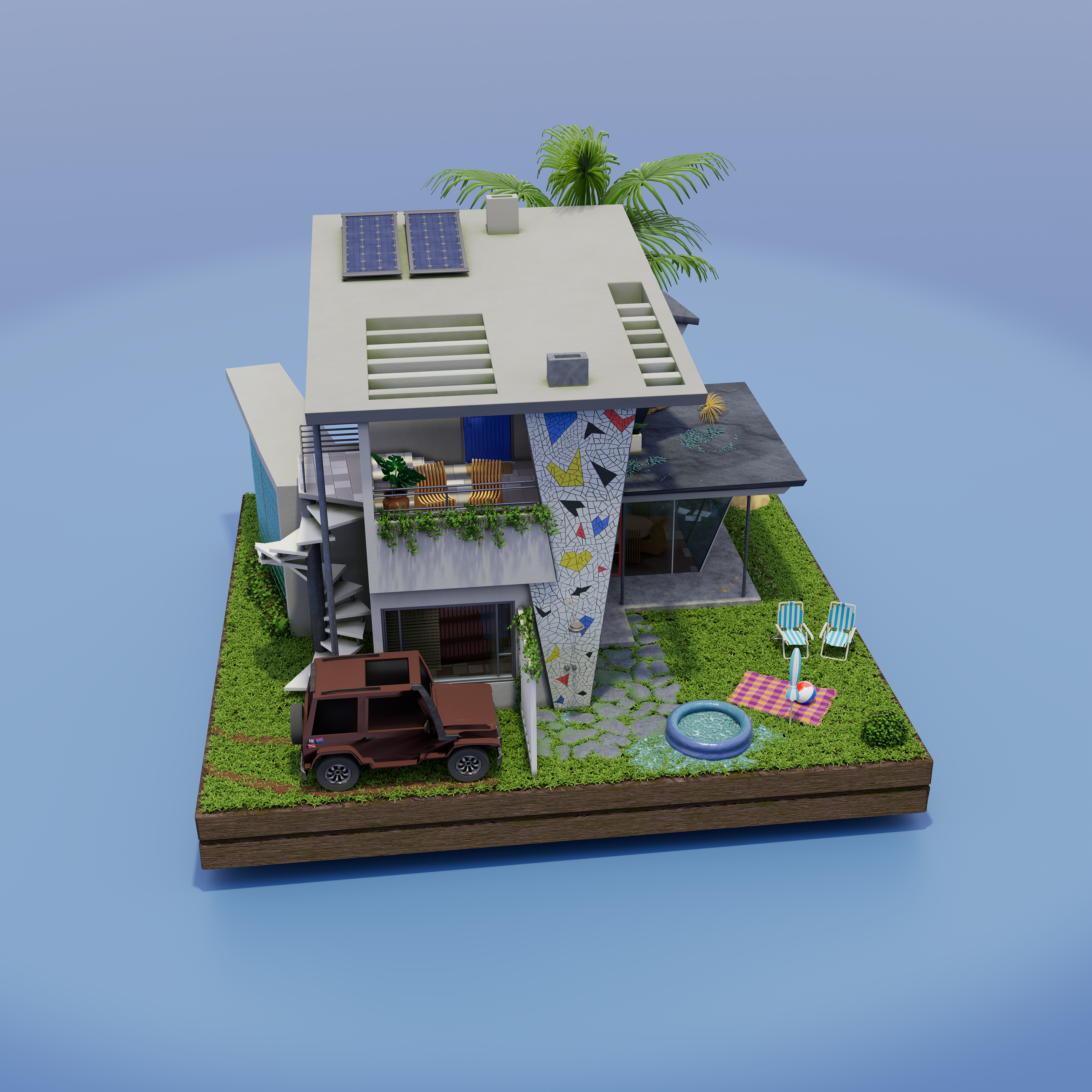
The goal was to develop a cozy and playful “dream house” scene, exploring an isometric perspective with a strong emphasis on shape language, color harmony and visual storytelling.
The scene features a variety of stylized props and modular elements, making it a large and detailed composition. Because of its scale, the project served as a valuable exercise in asset organization, prop modeling and maintaining visual clarity in a dense environment.
This project also helped improve my workflow in Blender, especially in terms of managing larger scenes, balancing detail across multiple focal points and refining stylized materials.
Thanks for watching!